THE BUSINESS · Practical production lessons from a working microbakery
A loaf coming out of the oven is not the same thing as a loaf ready for the customer. There is still cooling, sometimes slicing, packing, labelling and handover. When you’re planning a microbakery production day, forgetting that final stretch can turn a good bake into a rushed delivery.
I learnt to take production capacity seriously while working with compact ovens in my own microbakery. But oven capacity is only one part of the system. If your cooling racks, packing bench or delivery window cannot keep up, baking more bread will not necessarily help.
Cooling is part of production, not dead time
Fresh bread is still hot and releasing moisture when it leaves the oven. As it cools, the crumb firms and moisture moves through the loaf. Cutting it too early can compress the crumb and make an otherwise good bread look sticky or poorly baked.
That does not mean every bread needs the same resting time. A small baguette and a large wholegrain sourdough have different sizes, shapes and moisture levels. Judge the loaf and the conditions, rather than copying one fixed number across the entire range.
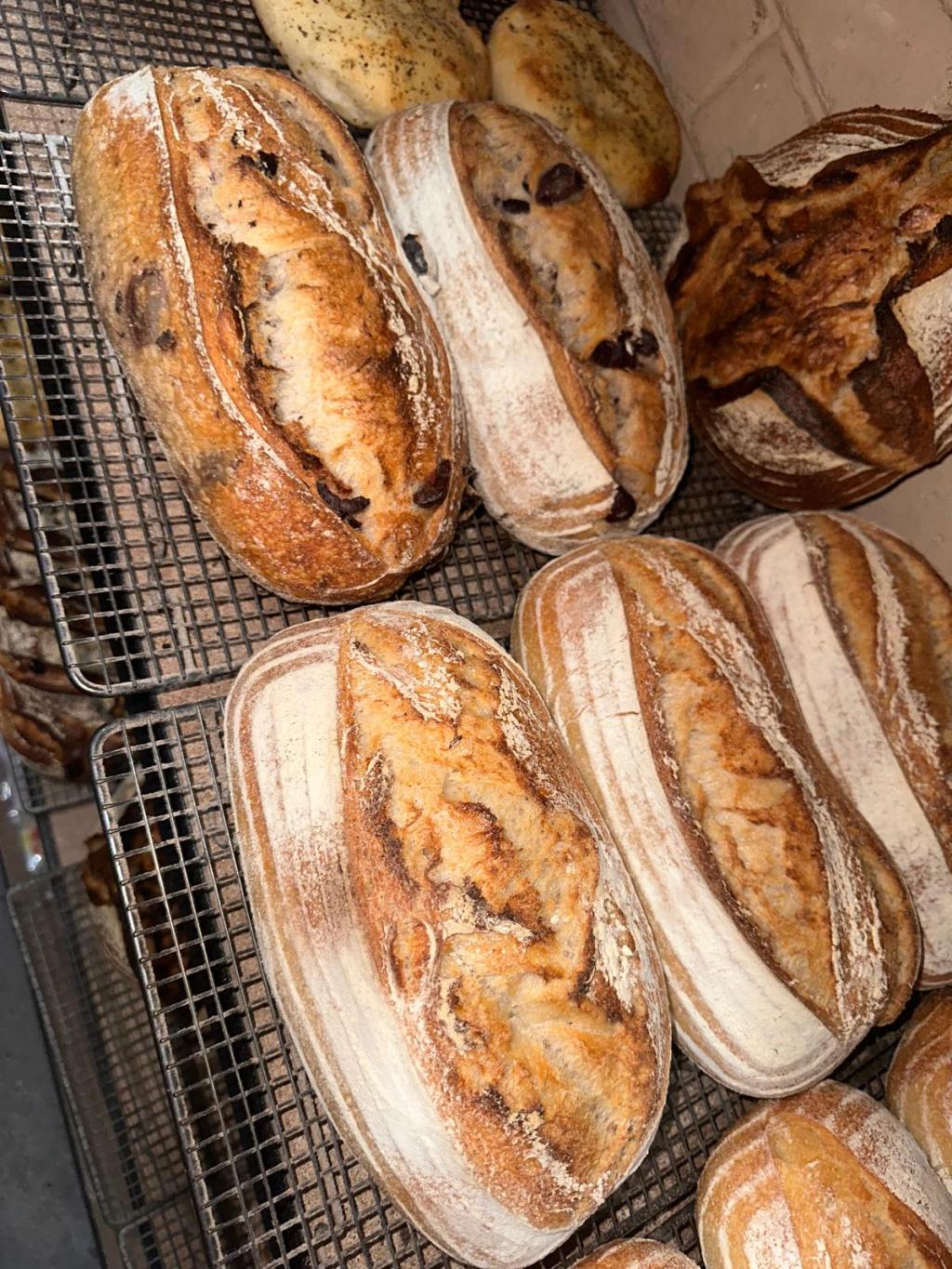
King Arthur Baking recommends cooling crusty sourdough on a rack and letting it cool completely before slicing. That simple advice matters even more when you are preparing multiple orders at once.
Why packing warm bread creates problems
Seal a warm loaf in packaging and moisture can condense inside. That can soften the crust, affect eating quality and create conditions more favourable to mould. Slicing too warm can also leave ragged slices and cause trouble with a slicer. The American Society of Baking explains these packaging-temperature problems in its technical guidance.
For crusty sourdough, packaging is a trade-off. A tightly sealed bag retains moisture but can soften the crust. More breathable packaging may protect crust texture for short periods but lets bread dry faster. Choose based on the bread, its journey and when the customer plans to eat it — not simply on what packaging looks attractive.
Make room for the bread you have already baked
Imagine every oven batch is ready on time, but the cooling racks are already full. The problem is not your oven. It is the space and handling capacity after baking.
Before increasing production, work out where each batch will go when it comes out of the oven. Keep loaves spaced so air can circulate. Use clean racks in a protected area, away from contamination, and avoid stacking hot bread in a way that traps moisture.
Think in separate stages: bake → cool → inspect → slice if needed → pack → dispatch. A bottleneck in any one stage can delay the whole order. I explored a similar lesson about equipment decisions in Choosing the Right Bread Oven: The $8,000 Lesson That Changed My Microbakery.
Work backwards from the customer, not forwards from the oven
For café supply or pre-orders, begin with the promised handover time. Allow enough time for delivery and loading, packing and labelling, cooling, and only then calculate when the final oven batch must finish.
If your last bake finishes just before the driver leaves, the plan is already under pressure. You cannot make a loaf cool properly by putting the bag on faster.
This is one reason I believe in realistic order cut-offs. Customers see a collection time; the baker has to manage everything that happens before it. Read Why My Microbakery Required 48 Hours’ Notice for Bread Orders for the production thinking behind that decision.
A simple cooling and dispatch check
- Is there clean, protected rack space for every batch leaving the oven?
- Can air circulate around the loaves without stacking or crowding them?
- Is each loaf sufficiently cool for its intended slicing and packaging?
- Does the chosen bag or wrap suit the crust and delivery window?
- Have you allowed time for accurate order checks, labels and handover?
- Does the dispatch plan leave room for delays without compromising the bread?
This advice is about ordinary, unfilled bread. Products with potentially hazardous fillings or toppings may need specific temperature controls and food-safety procedures. Follow the requirements for your actual products rather than assuming every bakery item can cool and travel like a plain sourdough loaf.
The real measure of capacity
It is tempting to measure a bakery by how many loaves the oven can bake per hour. A better question is: how many finished, correctly packed, good-quality loaves can you hand to a customer on time?
Cooling does not make for a dramatic social-media photograph. It does make a difference to consistency, product quality and the promises you can confidently keep.
If you’re building a microbakery, start by mapping your full production day. The Baking Journal covers the practical decisions behind sourdough production, and you can subscribe for future articles.


Leave a Reply