
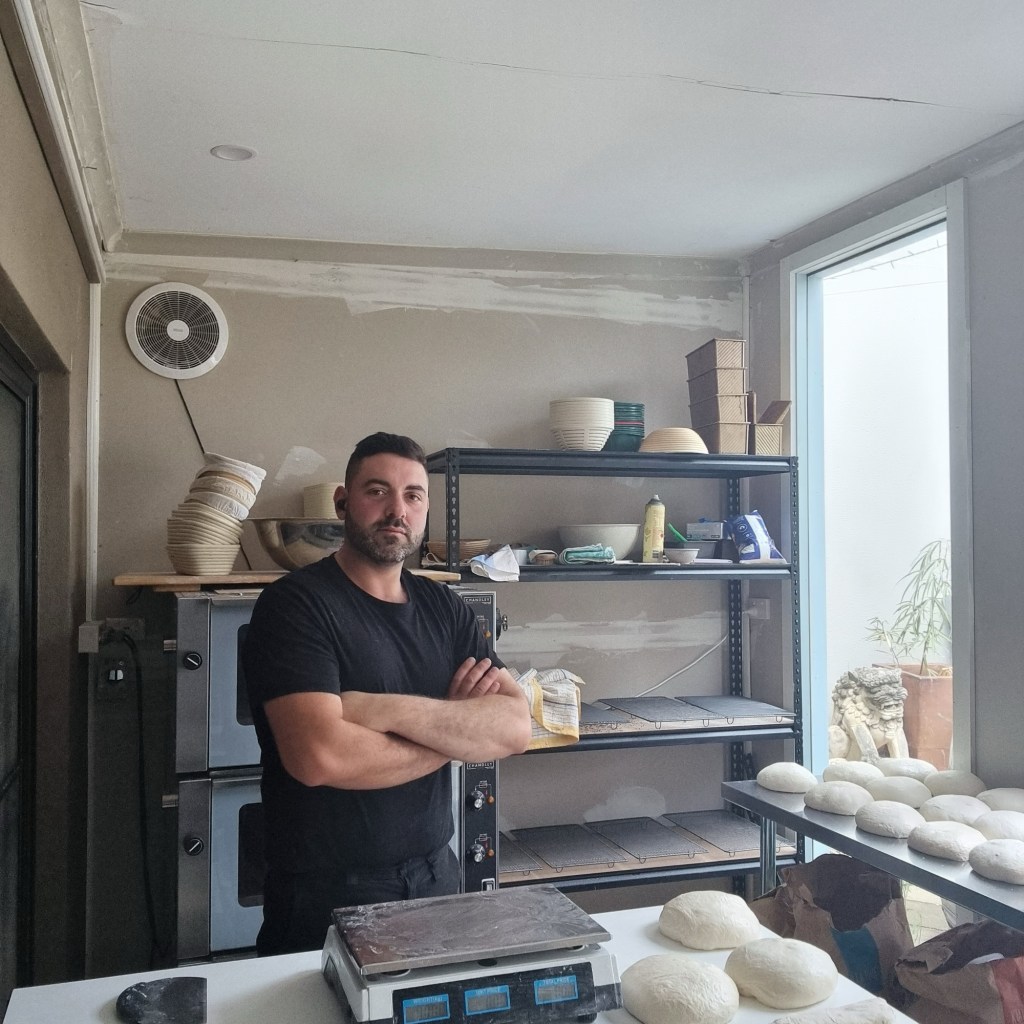
When I started building Healthy Nasti Kitchen, I did not have a big advertising budget or a marketing department. I had bread I believed in, people living around me, and a story I could share. My neighbours, friends and family were part of how I introduced my microbakery to the community. I also used letterbox flyers and social media to let people know what I was doing.
That experience taught me something important: you do not need to look like a large bakery to begin marketing. You need to make it easy for people nearby to understand who you are, what you bake, when they can order, and why they should trust you.
Start with the people around you
Tell your neighbours you bake sourdough. Tell your friends and family what you are building. Not because they owe you an order, but because people cannot support a business they do not know exists.
Be specific. “I bake sourdough in small batches and take pre-orders for collection or local delivery” is more useful than “I’ve started a business”. Explain your ordering deadline, available loaves, price, and collection or delivery arrangements. If you are operating from home, confirm your food-business obligations and any council requirements first.
Do not turn every family gathering into a sales pitch. A genuine introduction and an easy way to share your details are enough. The goal is awareness, not pressure.
Print a flyer people can actually use
When I was building my microbakery, I used printed flyers delivered to letterboxes. A flyer does not need expensive design. It needs to answer a few practical questions immediately:
- Who are you? Your bakery name and a short introduction.
- What do you sell? A clear description of your bread and, if helpful, one honest photograph.
- Where do you serve? Your local area, collection point or delivery suburbs.
- How do orders work? Your order link or contact method, deadlines and any minimum order.
- Why should people trust you? Your real name, baking experience and a place to see your work.
Keep the message short. You can use a QR code, but include a readable website address too. Check that both work on a phone before printing. Avoid vague claims such as “the best sourdough in Adelaide” unless you can substantiate them.
Respect letterboxes marked No Junk Mail or No Advertising Material, and check applicable local distribution rules. Do not leave flyers where they can become litter.
A simple flyer message
Hello, I’m Giuseppe, a local sourdough baker. I bake small batches of naturally leavened bread and take orders ahead of bake day. If you enjoy fresh sourdough and want to support a local baker, you can see my bread and ordering details at [your website]. Thanks for supporting local.
That is an example, not a script every baker should copy word for word. Make it sound like you and make sure every detail matches how your bakery actually operates.
Social media: document the work instead of pretending to be perfect
Many bakers hesitate to post because they think someone will judge their shaping, crumb, kitchen or camera skills. I understand the temptation to wait until everything looks professional. But if you wait for perfect conditions, customers never get to see the process.
Show the flour you are working with, your dough at different stages, the bake, the cooling rack, the finished loaf and what you learned when something went wrong. Explain why you made a decision. A real baking day gives you more useful material than a generic promotional graphic.
Documenting is not the same as claiming every bake is a success. If a loaf is underproofed, talk about what you observed without inventing certainty. That honesty helps people understand the skill involved.
Use clear captions with the suburb you serve, the next ordering deadline and a link to the current menu. If you are selling, make the next step obvious. If you are teaching, focus on one practical point rather than trying to squeeze a whole baking course into a short video.
Do not let fear of judgement decide whether your bakery exists
Some people will scroll past. Some will not understand why you spend hours making bread. A few may criticise. None of that tells you whether your neighbours want to buy a good loaf.
Separate useful feedback from noise. A customer saying the pickup instructions are confusing gives you something to fix. A stranger mocking your first video does not tell you anything meaningful about your bread or your business.
You are not asking everyone to approve of your ambition. You are giving the right customers a chance to discover it.
Turn interest into a repeatable ordering system
Attention without a way to order is wasted. Give customers one dependable place to find the current menu, prices, cut-off and pickup or delivery details. Reply promptly, but do not build a system that depends on answering messages at midnight.
In my own microbakery, a 48-hour order cut-off helped protect production planning. You may need a different window, depending on your process and capacity. What matters is communicating it clearly.
Before offering delivery widely, calculate what it costs. I have written separately about the hidden cost of microbakery delivery, including route time, vehicle expenses and minimum orders.
A practical seven-day neighbourhood marketing test
- Day 1: Write a one-paragraph introduction to your bakery and check that your menu and ordering details are correct.
- Day 2: Take three clear photographs of actual bread you baked, in good natural light.
- Day 3: Tell a few friends, relatives or neighbours what you are doing. Ask for honest feedback, not automatic praise.
- Day 4: Make a simple flyer, proofread it and test every contact link.
- Day 5: Distribute flyers responsibly in a small, relevant area. Keep track of the area and quantity distributed.
- Day 6: Share a short post or video showing a genuine part of your baking process and how people can order.
- Day 7: Review enquiries, orders and repeat customers. Ask new customers how they heard about you.
This is an experiment, not a promise of sales. Record what you did and what happened. If flyers bring enquiries but few orders, look at the offer, price, timing and ordering process before simply printing more. If social posts generate views but no local customers, make your service area and ordering information clearer.
Small beginnings are still a real business
I built my microbakery by showing people the bread, sharing the journey and making connections close to home. I did not need everyone in Adelaide to know me. I needed people who appreciated what I baked and could realistically buy it.
Start locally. Make something worth buying. Tell people it exists. Show your work consistently. Listen to the customers who actually order. Then improve the system one bake at a time.
For other microbakers: what brought you your first genuine customer outside your family? Tell us in the comments. Your experience might help another baker get started.


Leave a Reply