
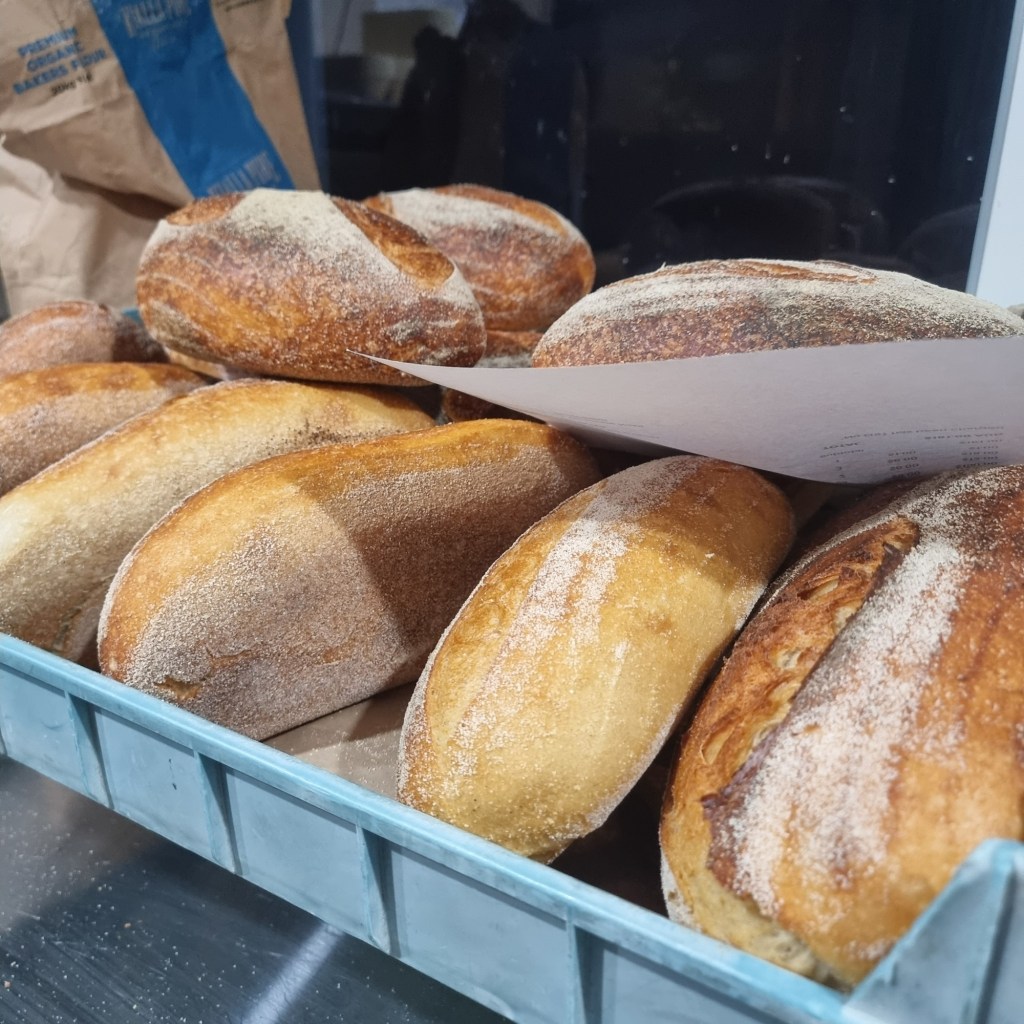
When I ran Healthy Nasti Kitchen, I delivered sourdough across Adelaide, sometimes as far south as Aldinga. I loved seeing my bread reach customers, but baking was only one part of the job. After fermentation, baking, cooling, slicing and packing, I still had to get the right loaves to the right people.
A delivery is not free simply because you are driving your own car. Your time, kilometres, vehicle costs and packaging are part of the business. More orders can feel like growth, but the real question is what those orders contribute after you have delivered them.
Count the whole route, not just the distance to the customer
A bread delivery includes loading, traffic, every stop, waiting for customers, unexpected detours and the journey home. If you calculate only the distance to the first address, you underestimate the work.
The delivery window also has to fit the production window. Bread needs time to cool before slicing and packing. Orders need to be checked and grouped. This is one reason I used a 48-hour minimum ordering window in my microbakery. It helped me coordinate production and dispatch instead of constantly improvising.
Six costs hiding inside a bread delivery
- Driving and loading time. Count the entire route, including the return trip. Your time has value even if you are not paying yourself a wage yet.
- Vehicle running costs. Fuel is only part of the bill. Consider tyres, servicing, wear and the portion of vehicle expenses attributable to the bakery.
- Packaging. Bags, labels, boxes and protective containers cost money.
- Administration. Confirming addresses, responding to messages and changing routes takes time.
- Failed drops. A wrong address or an unavailable customer can turn a straightforward stop into another journey.
- Opportunity cost. Hours spent driving are hours you cannot use for baking, marketing, selling or resting.
The Australian Government’s business pricing guidance recommends including materials, labour, overheads and relevant taxes when setting prices. Delivery deserves the same attention as flour and electricity.
A simple calculation: what does a delivery stop really cost?
Imagine a hypothetical route with ten customers, covering 70 kilometres and taking two hours including loading and stops. These are illustrative numbers, not records of my historical bakery costs.
- Two hours of labour at an illustrative $35 per hour = $70.
- 70 km at an illustrative vehicle allowance of $0.50 per kilometre = $35.
- Route-level administration and packaging allowance = $8.
- Total estimated route cost = $113.
- With ten customers, the average estimated cost is $11.30 per stop.
Now imagine the same route with only five customers. The estimated cost remains $113, but the average rises to $22.60 per stop.
These figures are not recommended delivery fees or official vehicle reimbursement rates. Your actual hourly cost, vehicle expenses, tax treatment and route density will differ. The lesson is to measure the whole route before offering free or heavily discounted delivery.
If someone orders one loaf, their order may not contribute enough to justify a distant trip. A café ordering a larger quantity may be a different proposition—but wholesale margins may be tighter, so you still need to do the calculation.
Five ways to make bread deliveries more sustainable
1. Group deliveries by area
Instead of accepting a scattered set of addresses every day, consider set delivery days or geographic zones. A concentrated route can reduce unnecessary driving. Use the suburbs where your customers actually live rather than designing a complicated map in advance.
2. Set a minimum order or clear delivery fee
Minimum orders, tiered fees or a charge by zone can protect the bakery. Do not copy another baker’s fee without checking your own numbers. Display the delivery charge clearly before checkout, and be transparent about the total price.
3. Offer collection where permitted
Collection can reduce driving time. But if you bake from home, check your local council and food-business requirements before inviting customers to collect from your premises. Permission to prepare food does not automatically settle every collection or parking question.
4. Treat wholesale differently from retail
A café or shop ordering several trays of bread may justify a route that would make no sense for one retail loaf. Compare the contribution after production costs with the time and distance involved, not just the number of loaves.
5. Promise a delivery window you can actually meet
Customers value reliability. Give a realistic window, confirm delivery instructions, and decide in advance what happens if no one is available. A missed delivery is not just inconvenient: it can damage the economics of the entire route.
Keep bread protected in transit
Food safety does not end at the oven. Food Standards Australia New Zealand’s transporting-food guidance says businesses must protect food from contamination, use clean vehicles and suitable food-safe containers, and keep potentially hazardous foods at safe temperatures.
Plain fully baked bread and bread products with perishable fillings may require different controls. Consider the actual ingredients, packaging, storage and transport conditions of each product. Do not assume all baked goods are exempt from food-safety rules.
My practical dispatch checklist
- Confirm each product, quantity, address, phone number and delivery instruction.
- Allow enough time for cooling, slicing, packing and labelling.
- Group stops and estimate the entire route, including the journey home.
- Make sure the vehicle and food containers are clean and suitable.
- Communicate the delivery window and have a plan for missed handovers.
- Record actual kilometres, hours, fees collected and unexpected costs afterwards.
Test your system for one week before expanding
A simple spreadsheet can teach you more than a complicated business plan. Give every delivery a row: order value, suburb, fee collected, route kilometres, minutes and any additional expense. At the end of the week, compare the delivery costs with the contribution left after producing the bread.
Ask yourself: Would I willingly repeat this same route every week? If not, change the radius, delivery days, minimum order or fees before accepting more orders.
I also recommend reading the five numbers to calculate before starting a microbakery. Delivery is where those numbers meet the real world. A loaf can make sense at the bakery door and much less sense after a long drive.
What I would tell myself before the first delivery
I would still deliver bread. Relationships with customers mattered, and handing over a fresh loaf was part of what made the microbakery special. But I would treat the delivery route as carefully as I treated fermentation, oven capacity and order cut-offs.
More orders do not automatically mean a stronger bakery. A repeatable production schedule and a sensible delivery route make those orders sustainable.
If you run a microbakery, what has been harder for you: making the bread or getting it to your customers? Share your experience in the comments.


Leave a Reply