
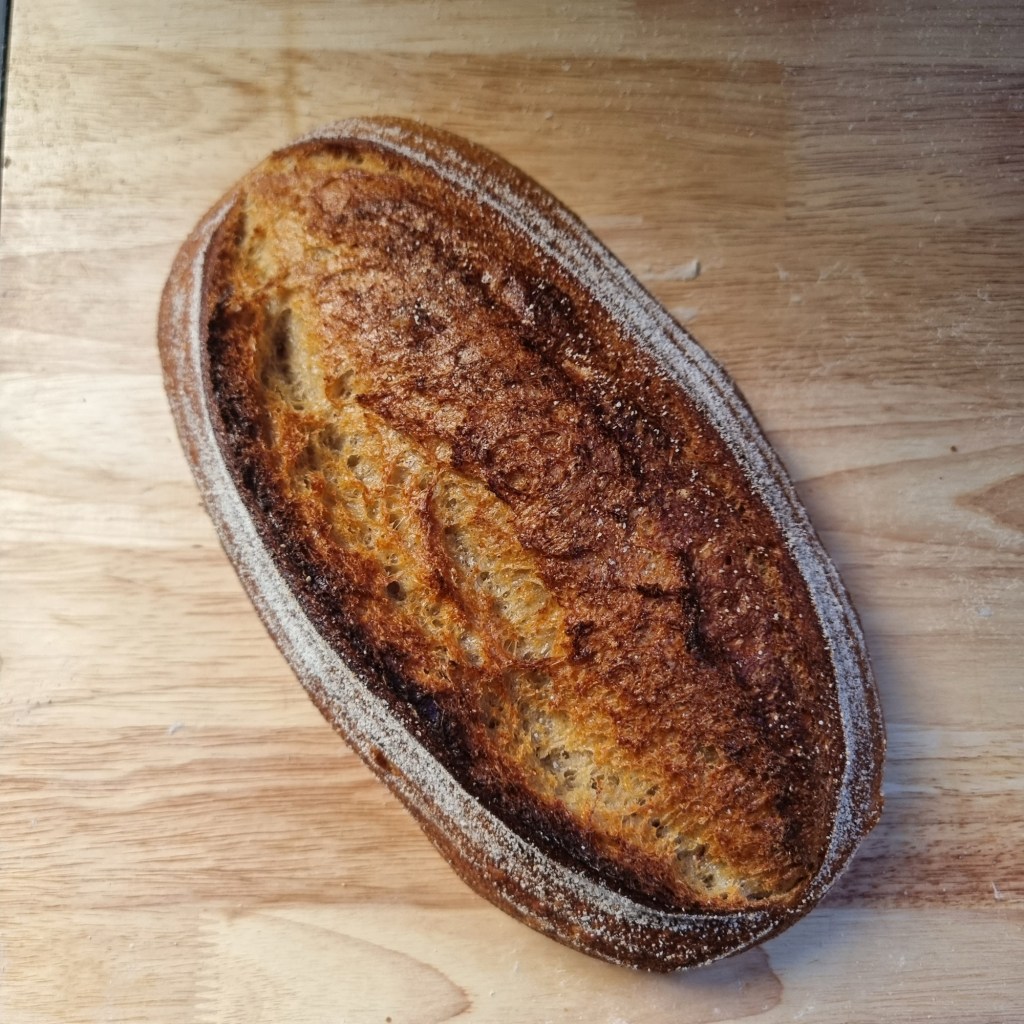
Is flour healthier when you mill the grain yourself? For a sourdough baker, the answer is more interesting than the simple claim that fresh flour contains more nutrients. The type of grain, how much of it stays in the flour, storage and baking method all matter.
Wholegrain is the starting point
A wheat kernel contains bran, germ and endosperm. The bran supplies fibre and micronutrients, the germ contains oils and nutrients, and the endosperm provides much of the starch and protein. Wholegrain flour retains all three. Refined white flour removes much of the bran and germ.
This means a freshly milled wholegrain flour may have nutritional advantages over refined white flour, but it is not automatically healthier than a commercially milled wholemeal flour that also retains the whole grain. The important distinction is wholegrain versus refined, not simply home-milled versus shop-bought.
Why freshness can matter
Freshly milled grain can bring a distinctive aroma and a rich, sometimes nutty flavour. Milling just before baking also gives you control over grain variety and how much flour you produce. The oils in the germ can become rancid over time, so wholegrain flour deserves careful storage. Freshness does not mean nutrients disappear immediately after milling.
Buy grain intended for human consumption, not treated seed grain. Keep it clean, dry and protected from pests. Store milled flour in a cool, dry place, or refrigerate or freeze it for longer storage in moisture-proof packaging.
What changes in sourdough?
Wholegrain flour often absorbs more water than refined white bread flour, and bran can affect dough structure. Grain variety, flour strength and particle size matter too. I explain why in Stop Chasing 80% Hydration: Your Flour Decides How Much Water It Needs. Do not assume your usual hydration will behave identically after a substitution. Allow time for the flour to hydrate and assess the dough itself.
Begin by replacing a modest portion of your regular flour with freshly milled wholegrain flour. Record the grain, milling setting, water added, dough temperature, fermentation observations and baked result. For a more consistent comparison, use the principles in my dough temperature guide. Change one variable at a time. Compare flavour and handling, not only crumb photographs.
What about the health claims?
Eating wholegrains is associated with health benefits, and wholegrain foods can contribute fibre and micronutrients to a balanced diet. But milling your own grain is not a treatment for digestive conditions, nor does it guarantee that every nutrient will be more available to your body. Fermentation, grain type, extraction and the rest of the diet also influence nutritional outcomes.
For background, consult the Grains & Legumes Nutrition Council’s wholegrain information and Oldways Whole Grains Council. For practical substitution advice, see King Arthur Baking’s whole wheat guide.
Is a grain mill worth it for a microbakery?
A mill can help you make distinctive bread and tell customers more about your ingredients. It also introduces equipment cost, cleaning, storage and labour. If oven capacity or delivery time is your main bottleneck, a grain mill might not be the best next investment. I learnt the importance of identifying the real constraint through my $8,000 bread oven lesson. Compare the total cost with the flavour, customer interest and selling price it enables.
Watch the milling video
Watch the demonstration, then use the considerations above to decide what is worth testing in your own baking.
The takeaway
Milling your own grain can deepen your understanding of flour and give your bread a distinctive flavour. The strongest nutritional case is for retaining the wholegrain components, not assuming that the mill itself creates a health benefit. Test it in your own sourdough, observe the dough, and decide whether the result justifies the extra work.
For more practical sourdough lessons, explore the Baking Journal, or subscribe to receive new articles by email.
Have you baked with freshly milled grain? Tell us which grain you used, how you adjusted hydration and what you noticed in the finished loaf.


Leave a Reply